$40+ Profit Per Order – The 3D Printed Name Letter Breakdown
 Reading Time: 5 minutes
 Your 3D printer is running in the background. You hear the 3D print finish. The parts easily pop off the build plate. You package it in a simple box. You ship it out.
+$40
That one box will make you a profit of $40.
That’s exactly what one seller on Etsy is doing.
The product? Letters.
Specifically, the Personalized Brick Name on Etsy.
It’s a Bestseller with 1,768 total sales, 3,033 favorites, and a 4.9 star rating from 351 reviews over 36 months.
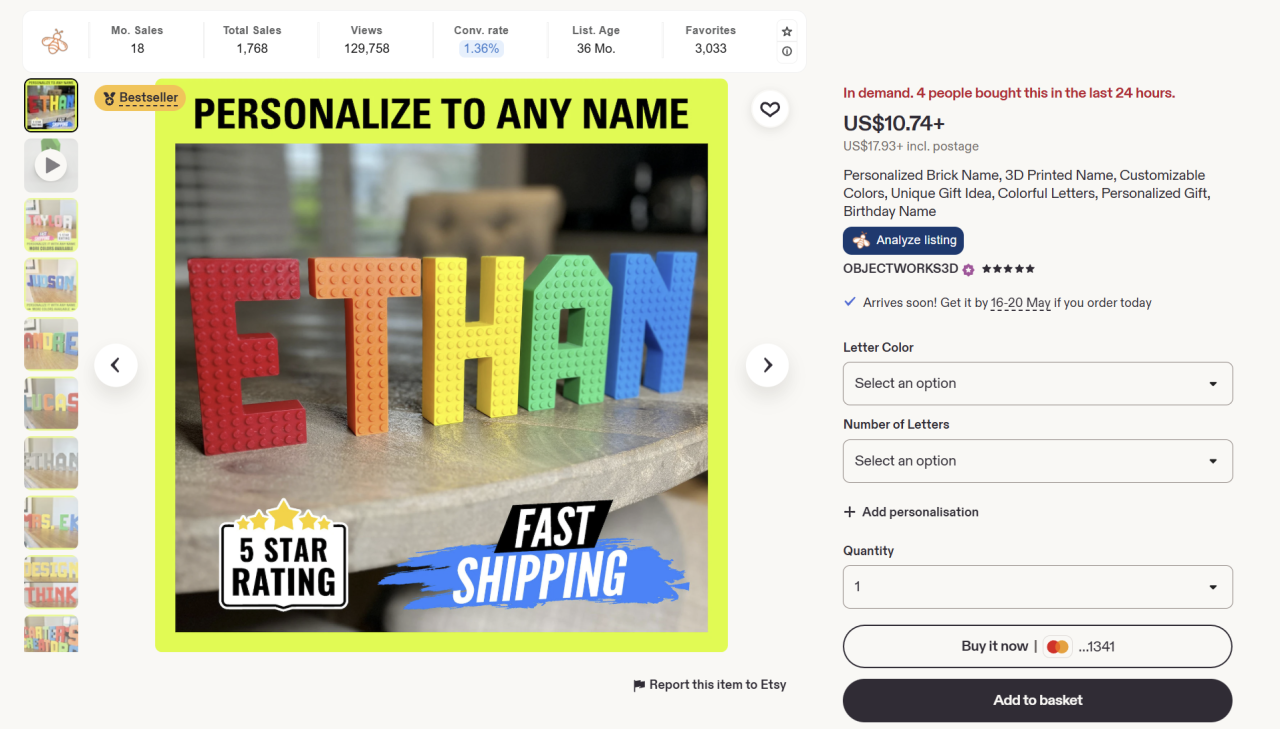
The seller store is OBJECTWORKS3D.
Let’s dive into how they’ve created a 3D print that’s made them thousands of dollars.
A Flat Rate Per Letter That Scales Beautifully
Most sellers price personalized products with some kind of volume discount baked in. This listing doesn’t do that. It charges a flat $10.74 per letter, all the way from 1 letter up to 24.
That means:
- 1 letter: $10.74
- 5 letters: $53.70
- 7 letters: $75.18
- 10 letters: $107.40
Scroll through the reviews and the most common orders are 5, 6, and 7 letters. Real names like ETHAN, JACKSON, ANDREA.
The last 10 reviews had 3-7 letters, with the average being 5-6 letters.
The average order value sits between $54 and $75, and buyers are going for it because it’s a Lego-themed gift for someone specific.
Price sensitivity drops significantly when emotion is involved.
What Does It Actually Cost to Make?
A single LEGO-style letter at 4.7 inches (120mm) tall uses around 40-60g of filament per letter. At $15/kg that’s $0.75 per letter.
For a 5-letter order:
- Filament: $3.75
- Packaging: $1.00
- Machine depreciation, electricity etc. (10%): $0.48
- Labor (15-20 mins at $20/hr): $6.00
Total cost to fulfil: $11.23
Total revenue from order: $53.70
Net revenue after Etsy’s 6.5% fees on a $53.70 sale is around $50.21.
Profit per 5-letter order: $38.98
Switch that to a 7-letter order and you’re clearing over $55. The letters batch print overnight, so your active time per order stays low even as the order value climbs.
What the Reviews Reveal
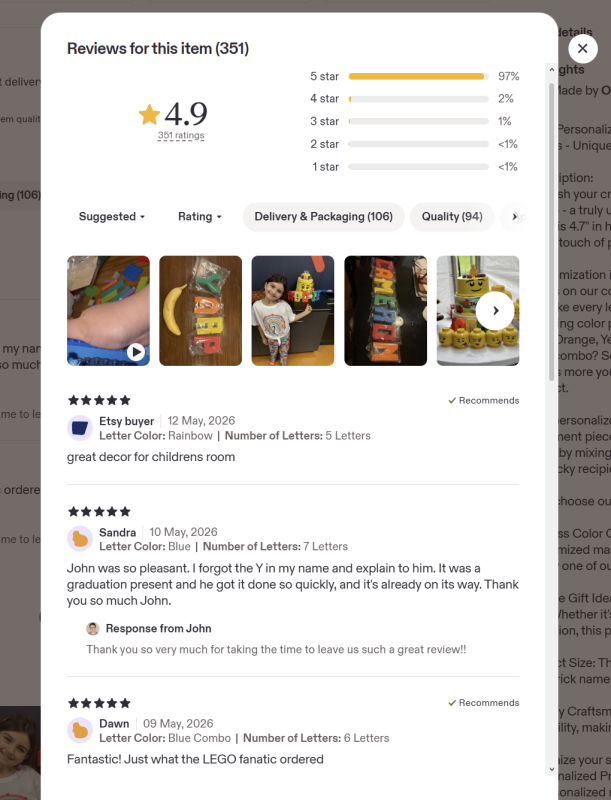
351 reviews with 97% at five stars is strong, but let’s look into the breakdown.
The top mentioned themes are delivery and packaging (106 mentions), quality (94), and appearance (71).
That tells you exactly where to focus when setting up your own version, fast dispatch, good packaging presentation, and clean prints matter most to buyers of this product.
One reviewer mentioned the seller corrected a missing letter error in their order before it shipped.
For a personalization product, being easy to work with adds trust and reliability to both past and future customers.
The full color range available is Rainbow (Red, Orange, Yellow, Green, Blue), Blue Combo (Dark Blue, Blue, Light Blue), and Pink Combo (Magenta, Pink, White). Rainbow and Blue Combo appear most frequently in recent orders, so those are the ones to lead with in your listing images.
One negative review is worth paying attention to. A buyer spent nearly $100 and confirmed with the seller beforehand that real LEGO pieces would fit onto the letters.
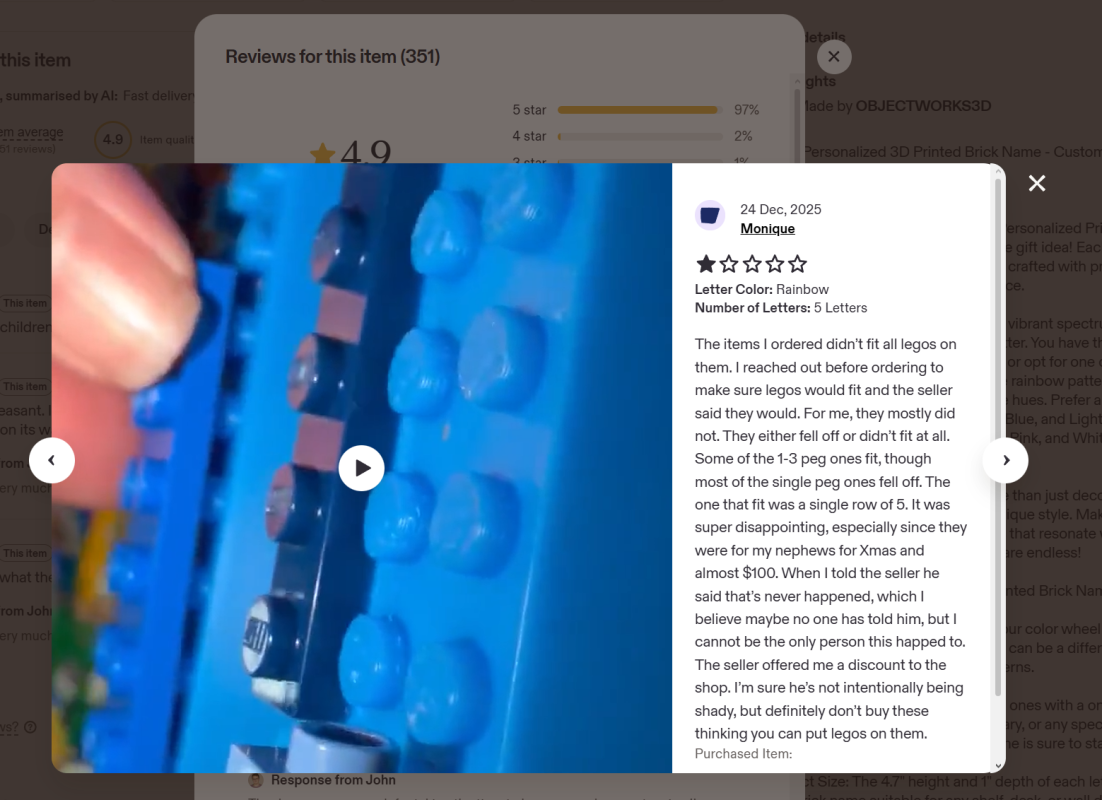
When the order arrived, most of the LEGO pieces either fell off or didn’t fit at all.
The seller offered a discount rather than a replacement order, which didn’t satisfy the buyer.
The lesson here is straightforward. Don’t claim LEGO compatibility in your listing unless you’ve tested it thoroughly. That specific expectation will generate returns and damage your review score fast.
Who’s Actually Buying This?
The obvious buyer is a parent picking a gift for a child’s bedroom or birthday. But there are more potential buyers.
Teachers buying classroom name displays, parents ordering for a new baby’s nursery, even graduation gifts (one review mentioned that) are all real use cases.
There’s a wide buyer base for a product like this, but it’s a good idea to focus on a specific buyer at first to really niche down and resonate with a specific audience.
People think appealing to everyone is the best move, but being specific makes that target audience want to buy way more at first.
Once you build some traction, then you can choose to expand if it makes sense.
How I Would Use This Strategy
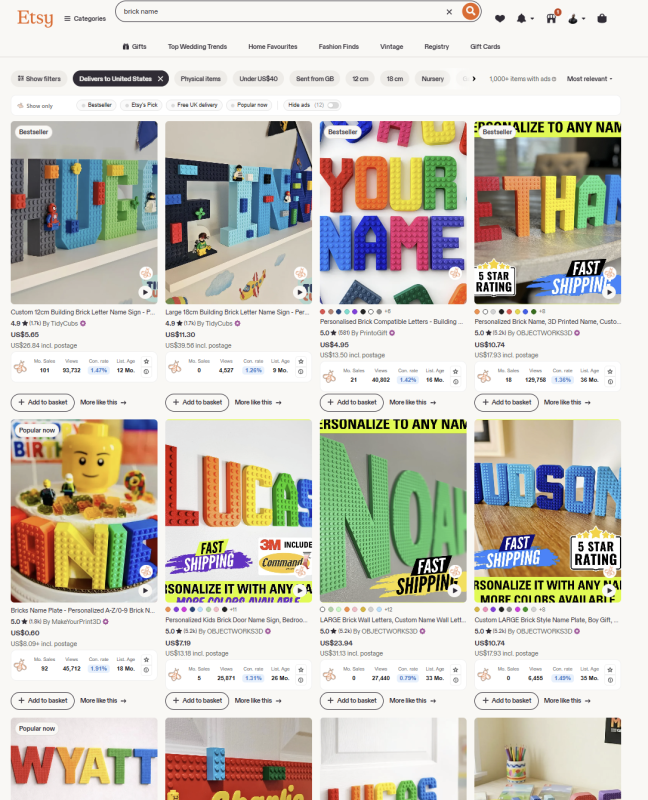
Searching “brick name” on Etsy returns a lot of listings, but take a closer look and you see something interesting.
OBJECTWORKS3D appears multiple times on the first page with different products at different price points.
That tells you a competitive niche isn’t necessarily a bad one if you can execute well enough to own shelf space within it.
That said, for someone starting out, building traction in a less crowded space first is still the smarter move.
Take the concept and pivot the theme.
The same 3D printed letter format works across movies, TV shows, video games, board games, and countless other niches.
Search each theme on Etsy and compare the number of listings to the demand.
I’d use Keyword Keg to check search volume and find where interest is high but competition is still manageable.
The margins are strong, the market is proven, and the product photographs beautifully for both Etsy and social content.
The real opportunity though isn’t in copying this exact listing. It’s in taking a proven format and finding the version of it that nobody has made yet.
Do you have a product idea or Etsy listing you want me to break down? Send me a message or drop a reply and I’ll take a look.
